Cornea Treatment
Cornea Treatment
Cornea Disorders & Treatment
The cornea plays an important role in focusing vision. Conditions affecting the cornea can lead to blurred vision, pain, irritation, and long-term visual impairment if untreated.
Common corneal conditions treated include: Keratoconus, Pterygium, Keratitis, and Dry Eye Syndrome.
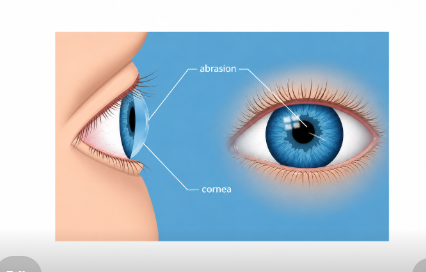
Causes of Corneal Blindness
Several conditions can damage the cornea and threaten clear vision early diagnosis and treatment make a real difference.
Keratoconus
The cornea thins and bulges into a cone shape, distorting vision and causing high cylindrical power.
Keratitis
An infection of the cornea that, if untreated, can scar the surface and reduce vision.
Chemical Injury
Acid or alkali burns that damage the corneal surface and may cause lasting scarring.
Corneal Dystrophies & Degeneration
Inherited or age-related disorders that gradually cloud and weaken the cornea.
Corneal Opacity
Scarring that turns the normally clear cornea hazy or white, blocking light from entering.
Keratoconus
The cornea gets thin and conical, causing distorted vision and high cylindrical power. It is more commonly seen in children with seasonal allergies and a habit of eye rubbing.
Patients Most Often Complain Of
To Diagnose Keratoconus
Tests used to confirm the condition
Eye Refraction
Slit-Lamp Examination
A vertical beam of light is directed on the surface of the eye to evaluate the shape of the cornea.
Keratometry
A circle of light is focused on the cornea and its reflection is measured to determine the basic corneal shape.
Computerized Corneal Mapping
Optical Coherence Tomography & Corneal Topography
Records detailed images of the cornea to map its surface and measure its thickness.
Corneal Cross-Linking (CXL)
Corneal Cross-Linking strengthens the cornea and helps slow the progression of keratoconus.
Epithelium Off CXL
The outer epithelial layer is removed before applying riboflavin and UV light, allowing deeper and stronger cross-linking.
Epithelium On CXL
The epithelium is left intact a gentler approach with quicker recovery and less discomfort.
Keratoplasty
A surgical procedure that replaces the damaged cornea with healthy donor tissue.
Penetrating Keratoplasty
Full-thickness replacement of the cornea with healthy donor tissue.
Deep Anterior Lamellar Keratoplasty (DALK)
Replaces the front layers of the cornea while preserving the patient's healthy inner layer.
Corneal Endothelial Keratoplasty
Selectively replaces only the innermost endothelial layer of the cornea.
Pterygium
Pterygium is an abnormal, wing-shaped growth of tissue that extends from the sclera (the white of the eye) onto the cornea, and can affect both vision and comfort.
Treatment
Surgical removal of the abnormal tissue.
Post Operative Care
Eye drops prescribed
Pain medication if required
Mild soreness expected
Eye redness for a few days
Severe pain is rare
Nausea may occasionally occur
Review & Follow Up
Day 1
First review after surgery
1 Week
Early healing check
1 Month
Progress assessment
Children
Longer follow-up to prevent amblyopia
Keratitis
Most cases of keratitis can be treated medically, and vision can often be restored when the infection is caught and managed early.
Dry Eye
Dry eye occurs when the quantity or quality of tears is inadequate to keep the eye comfortable and healthy.
Common Causes
Computer Professionals
Smartphone Overuse
Sjögren's Syndrome
Chemical Exposure
Dry eye can usually be treated medically.
Frequently Asked Questions
Restore Clarity for Your Eyes
Experience highly advanced, personalized care for Cornea Treatment at Dr. Vaidya Eye Hospital. Book a comprehensive diagnostic exam.